#241 What sort of legal support does your business need?
Send a text message to the show
When a business owner reaches out to me for the first time, sometimes they know exactly what they need. Sometimes they have no idea, they just know that their legals dare not up to scratch, or they know they have outgrown what they have in place.
Almost always, after they start working with me, I hear a version of the same question. What else do I need, Tracey? What support do you think I still need?
Because it comes up so often, I want to unpack how I approach it, so you can understand what legal support can look like in your small business, and how it might change as your business grows.
Not Every Lawyer Works The Same Way
What works for one lawyer will not work for another, and the way I work may not suit the way another lawyer works. That is fine. Horses for courses.
I make no apology for saying I am not the lawyer for everybody.
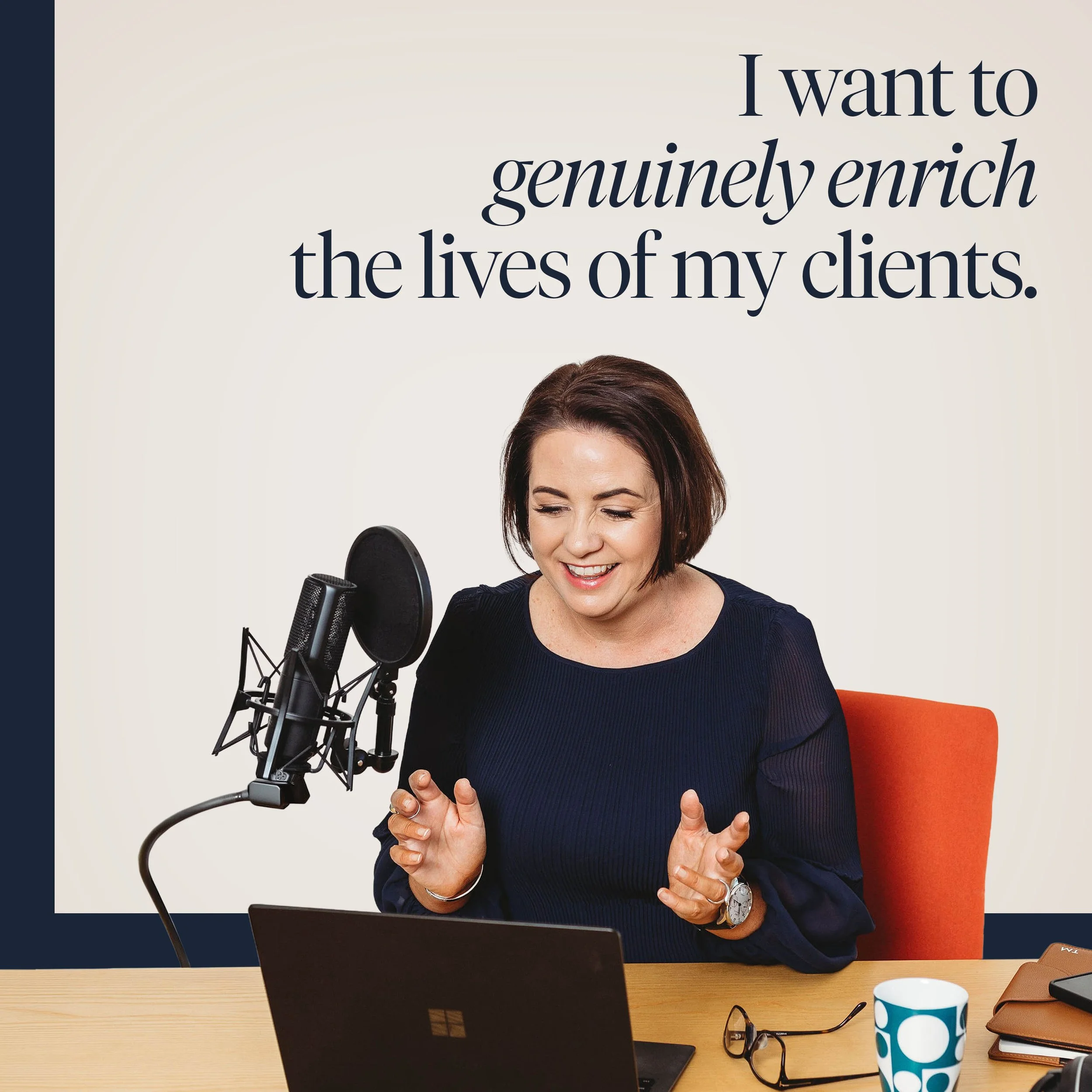
My approach is holistic and collaborative. I am involved in the process. Relationships matter to me, because I want to genuinely enrich the lives of the business owners I work with, and I want to do that through legal expertise that helps set you up for success.
Some people do not want that. They just want a document they can change the names on, and they do not want to spend time on the process. If that is you, that is okay, but I am not the lawyer for that job.
The Two Main Ways Legal Support Can Work
There are two main ways I work with business owners.
The first is on an as needed, project basis. The second is a more embedded, fractional arrangement, which some people think of as similar to a retainer.
Both can be the right fit, depending on what your business needs right now.
Option One: As Needed, Project Based Support
This is the most common scenario.
A business owner reaches out and says something like, I need advice on this, I am in a pickle, or I need documents drafted. Sometimes it is also, I have templates from before, or I borrowed someone else’s, and I need to get it sorted.
There is usually a clear project or piece of work to scope.
From there, we scope the work and I prepare a tailored proposal. That proposal sets out the fees, payment options, what is included, what is involved, how long it takes, and what I need from you. It is all tailored to that specific scope.
Then we onboard you into the workflow, we work together, we finish the matter, and we off-board. Simple.
The benefit of this approach is clarity. You know what you are getting, you know what it costs, and you are not left guessing.
One of the biggest differences in how I work is that we fix our fees for matters like this.
My clients do not get surprise invoices, and they do not see line items like six minutes to read an email or six minutes to return a phone call.
Fixed fee means package deal. If you need ten calls, that is fine. You are not charged extra.
Once a client has worked with me, it is easy for them to come back when they need something else.
Often it is a new project. It might be a contractor agreement, a new client agreement, a new offer, or the next growth stage. We scope it, proposal, onboard, do the work, off-board.
As part of off-boarding, we also share with existing clients how they can book ad hoc advice sessions as needed through a unique calendar link. You get the advice you need when you need it, and it stays straightforward.
Option Two: Fractional Legal Support For Growing Businesses
The second way I work is fractional support.
This tends to suit growing businesses who are moving fast. They do not always know exactly what they will need, but they know they will need support available as and when things come up.
It can also suit businesses who are not ready to hire an in-house lawyer. They do not need someone forty hours a week, but they do need someone close enough to the business to move quickly.
Fractional legal works like fractional CFO or fractional COO support. It is an ongoing arrangement, tailored to the business.
What Fractional Support Looks Like In Practice
Fractional support usually starts with a business owner saying, we need someone; we do not know exactly what we need, but we need to start here and build from there.
We look at what is coming up in the next quarter. We talk about your pipeline, your growth trajectory, and what projects are on the horizon.
That might include growing the team, expanding offerings, bringing in shareholders, changing structures, or new intellectual property considerations. Often there is also catch-up work, like documents that have not been reviewed for years, contractor arrangements that are unclear, or agreements that do not match how the business operates now.
We scope it, and we usually set the arrangement up in quarters so we can review and adjust. At the end of the quarter, we can increase, decrease, or shift the focus depending on what the business needs next.
Fractional clients get priority access because the whole point is availability. That means I can attend meetings at short notice, review documents before you sign, and support you through fast-moving decisions without you waiting weeks for the next available slot.
Why Fractional Support Is Limited
Because fractional support requires real accessibility, I only take on a couple of these arrangements at a time.
I will never promise a business owner I can be available and then put myself in a position where I cannot deliver that. Sometimes there is a wait list, sometimes there is not, but the point is that the level of support is real, not theoretical.
The Real Question: What Do You Need Right Now?
The best legal support is the support that matches the season your business is in.
If you have a clear project and you are happy to scope work as you need it, project based support can be perfect.
If you are in a growth phase with lots of moving parts, and you need support that can move with you, fractional support can be the better fit.
Neither is “better”. They are just different tools for different stages.
Why Accessibility Matters So Much To Me
One reason I built my business the way I did was accessibility.
When my dad passed away, I saw firsthand how hard it could be for ordinary people in rural and regional areas to access competent, compassionate legal support. The barriers were real. The travel, the delays, the difficulty getting someone on the phone, and the confusion when advice was not explained in a way people could understand.
I could not fix that in every industry, but I could fix it in mine.
So I work virtually with clients across the country, including rural and regional businesses, and I love that. Most of my clients are service-based, some are bricks and mortar, and many are online.
Post COVID, people are far more open to working remotely, but when I started, that was not the norm. Now it is, and it has opened up access in a way I am genuinely grateful for.
What To Do Next
If you are not sure what legal support you need, start by looking at what is on your plate for the next three months.
Are you dealing with one clear project, or are you in a season where things are moving fast and you need ongoing support?
Once you can answer that, it becomes much easier to choose the right type of legal help, and to have a more confident first conversation with the right lawyer.
-
[00:00:00]
[00:00:49] Tracey: When a business owner reaches out to me for the first time, sometimes they know what they need, what legal support they need, and sometimes they don't. Almost inevitably, at some point in that first [00:01:00] conversation, there'll be something along the lines of
[00:01:02] " What else do I need, Tracey? How can I work with you? What support do you think I need?" Because it's something that comes up so often when I'm having discussions with business owners for the first time, I wanted to unpack my approach here and share it with you so that you too have the benefit of understanding how you can work with a business lawyer like me, and what legal support you may or may not need in your business, or you might need something now and it might look a bit different later.
[00:01:28] So I'm gonna share with you how I approach this and the way I work with businesses
[00:01:32] So that you can understand what your business needs and how to best support your business legally moving forward. First thing to say, though, is that lawyers are all different. what works for one won't work for another, and the way I work may not be suitable to the way another lawyer works.
[00:01:50] So I'm not saying here this is how everybody works. Other lawyers might have something very similar or a variation of what I do or something completely different Horses for courses, [00:02:00] as they say. There's lawyers and there's lawyers, and I make no apology on this podcast of saying to my listeners, "I'm not the lawyer for everybody."
[00:02:09] I am very holistic in my approach. I'm very collaborative. I'm very involved in the process when I work with a client. Relationships to me are very important. The main driver for what I do in my business is around relationships, because I want to genuinely enrich the lives of the business owners that I work with, and I want to do that through my legal expertise and through setting business owners up for success legally.
[00:02:33] That doesn't suit everyone, and that's okay. Some people don't want to talk to their lawyer. They just want a document where they can change the names, and they don't want to spend the time, and that's okay. I'm not the lawyer for that person, and I'm okay with that. So, this is how I work, and this is the type of discussion I have with new business owners when they first reach out.
[00:02:54] First of all, there's two ways that I work with business owners. One, on an [00:03:00] as-needed basis, I'm gonna share with you what that looks like. And two, on a more embedded fractional basis. Some might say it's very similar to a retainer arrangement. That's the second way. The first is the most common, as needed. the most common scenario here is when a business owner reaches out to me and says something like, "I need advice on this, please. I'm in a pickle with this," or, "I need documents drafted. Can you tell me what I need? Can we work together so you can develop them for me, please?" Or some variation of that.
[00:03:31] Sometimes it's, "I have templates from before. I borrowed someone's," or, or whatever it might be. But there's some clarity around what's needed, and there is a piece of work or a project that's needed. So we scope that work, and I prepare a tailored proposal for each client so they know what it looks like to work with me in terms of fees, payment options, what's included, what's involved, how long it takes, what I need from them, all of that tailored to that particular [00:04:00] scope of work or that particular project.
[00:04:02] We then onboard them. We get them into the workflow. We work together collaboratively. It concludes. We off-board. Simple. Probably very much what you would have expected.
[00:04:14] Once a client has worked with me, it's very easy for them to come back when they need something else, and often it's a new project.
[00:04:21] So this time it might be in relation to a contractor or a different client or the next growth stage. Again, we go through the same process. We scope out the work, we prepare a tailored proposal, we onboard that particular matter, we get them into the workflow, we do the work, we off-board. That's how it's done.
[00:04:41] As part of our off-boarding, we always share with our beautiful existing clients ways that they can reach out to get their ad hoc advice from me and their exclusive existing client sessions with me as, as they need it. So they actually have access to my calendar through a unique link that they can [00:05:00] access to book into my calendar when I'm next available or in a time that suits them.
[00:05:04] We invoice for that, and they get the advice that they need as they need it. We always fix our fees for matters like that. So in the tailored proposals that I prepare, there'll be a fixed fee for that work setting out what's included, and that's what they get That means that next time they engage me, the same thing happens and the same thing happens.
[00:05:26] My clients don't get invoices by surprise. They're not surprised ever because we're always very transparent and upfront in relation to what they'll be paying for what they need. my clients also never see on my invoices line items for things like six minutes to peruse email or six minutes to return phone call.
[00:05:48] Fixed fee means package deal, so if you need 10 phone calls with me, that's okay. You don't get charged extra. I know what I'm doing. I've done this long enough to back myself. My clients deserve [00:06:00] the benefit of that, and I don't have the conversation around, "Well, I don't know how much it's going to cost because I don't know what's involved.
[00:06:06] How long's a piece of string? I'll bill you every time I think about your matter." That is one of the many reasons I stepped away from traditional private practice just over seven years ago, because that's not how I do it. I do things the way I want to do them in a way that's really authentically aligned with me as a person and my personal values, and how I know can best serve business owners.
[00:06:31] So that's what it looks like to work with me on a per project matter or on an as needed basis. That doesn't suit everyone though, because sometimes work's more pressing, you don't have time to wait for the next availability or getting into the workflow at the end of the line. That doesn't suit everyone.
[00:06:53] So what can better suit business owners that don't want to work that way, but also [00:07:00] business owners or businesses who are not yet in a position where they want to employ full-time an in-house lawyer because of the expense and also they don't need someone at the 40 plus hours a week, is a fractional basis.
[00:07:14] So it's a An ongoing arrangement. I call it fractional. It's very commonly referred to as fractional, and you've probably heard of fractional CFOs or fractional COOs. Fractional legal is exactly the same, where we develop a tailored arrangement for a business. These are usually growing businesses, to be honest.
[00:07:34] This arrangement really does best serve businesses who are growing because they don't know what they're going to need, but they know they need the support available as and when they need it. So obviously, the fractional arrangements have priority always because they have the standing arrangement. So that usually starts when a business owner reaches out and says to me, "We need someone.
[00:07:55] We don't know exactly what we need. We need to start here, and then please help." [00:08:00] And that looks like working out what sort of help they think they need for the next quarter in terms of days or hours, how much support they think they're going to need, where are they in their growth trajectory,
[00:08:12] What's in their pipeline, what projects, what's the next step? And so it's usually things about growing the team, growing the offerings, bringing in shareholders, changing structures, new intellectual property considerations. There's a whole lot of moving pieces, and they tend to move fast, but the business also knows that there's quite a bit of catch-up.
[00:08:33] All of these documents need to be reviewed, haven't been reviewed for three years, Tracey. Don't have my suite of documents I need for my team. Don't have my finger on the pulse with my contractors. Not sure about those particular client agreements or that particular distribution agreement or what it might be.
[00:08:50] So we scope it up, and we have a look, and we list all the things, and we, "Okay, this is where we start," and it evolves from there. That does get a proposal, too, for an ongoing [00:09:00] arrangement. And I always like to do these by quarters because then we can revisit at the end of the quarter to see whether or not the support they're getting is where it needs to be.
[00:09:09] Do we need to adjust, increase, decrease? Whatever that might look like. So for the first quarter, there'll be a proposal, and it'll be a scope, and it's, "Okay, we're coming in to do this. This is the time that we're going to commit per week." Usually, we do it in weeks, and we are available.I am available. I'm available on the phone.
[00:09:26] I'm available to attend meetings at short notice because business owners going through these growth stages don't necessarily always have a two-week lead time to tee up a meeting and let me check if my lawyer's available. The fractional arrangements get priority always so that we can move things, we can shuffle, we can be available outside the hours that we normally would to accommodate and to give that holistic support that we give to our fractional clients.
[00:09:51] Because of that, and this is what I always share when I'm having these discussions with new business owners, because of that, because of that need to be [00:10:00] available and accessible, we can only ever take on a couple of these at a time, because I would never promise to business owners, "Yes, I can be available for you," and then have myself in a position where I can never be available.
[00:10:12] Over-promising would do that. So there's only ever two or three that I take on at a time where I can promise and hand on heart guarantee that level of accessibility and support in a really holistic way. That means there's a wait list sometimes. There's not at the moment, but sometimes there's a wait list.
[00:10:28] But otherwise, there can be discussions around when does this need to start? Start yesterday, Tracey, start in a month, start next quarter, whatever that looks like. Sometimes the growing business needs some time to gather their priority list, if you like, and then we tailor the arrangement that way. So it starts with those reviews, that support in the meetings, review documents before you sign, have this conversation with the contractor, please, I don't want to say the wrong thing.
[00:10:55] There's a whole range of ways that fractional relationship can work, and it's [00:11:00] always tailored to the business that I'm talking to at the time. That arrangement can be really attractive for businesses that have got a lot going on, they're in a growth phase, and there's so many moving parts.
[00:11:12] They need the support, they need it now, and they need the guidance It doesn't suit everybody. And for businesses who just want legal as and when they need it, and they're happy for the work that they need to be scoped up and a proposal issued on an as-needed basis, then the format that I described initially suits them perfectly.
[00:11:33] So I'm hoping that that helps you understand the way legal support can look for businesses and what is available. Certainly, that's available from me the way that I work, but like I said, other lawyers work in different ways. One of the things that really drove me to set up my business when I did the way I did was accessibility.
[00:11:55] It was really important to me because at the time, my dad had recently passed away, [00:12:00] and accessibility to competent and quality legal support with compassion was really hard to come by. I grew up in a small rural town in New South Wales. parents still lived there at the time. Both of my parents have since passed away. but accessibility was something that was so jarring because it was so difficult, and the trips to Sydney and the trips to the city and not being able to get people on the phone and not understanding when they spoke to them was something that I saw firsthand. And I tell you, it was really difficult to witness it because they were just ordinary people desperate for answers, in need of help, in need of support, and it was really hard to get it I'm not a doctor.
[00:12:43] I'm not in the medical field, so there's nothing I could do about that. I did what I could, but there wasn't anything I could do about that going forward. But what I could do about it, I realized, was break down the barriers of accessibility to the city legal support. So I work [00:13:00] in Canberra and Sydney, city legal support, so rural and regional businesses can get the support that I offer, and I love that.
[00:13:09] I now have clients all over the country. Melbourne, yes. Areas of Victoria, rural Victoria that I didn't know existed, yes. Even Western Australia, Queensland. I've got clients that live in so many places that I'd never heard of, and I love that. Most of my clients are online. Some are bricks and mortar, but the predominantly they're service-based business owners.
[00:13:31] And post-COVID, most people have accepted the different way of working, being virtual and remote, the phone, the Zoom meeting teams, all the things. Back seven years ago when I started, that wasn't the case. I started the business in 2019, then we had COVID. So COVID did a lot of the legwork in terms of changing people's perceptions and understanding around how you can work with businesses.
[00:13:56] So now being able to stand here and record an [00:14:00] episode for you and share with you how I work with business owners, what it looks like to work on an as-needed basis, what it looks like to engage me on a fractional basis, what that looks like regardless of where you are, to me, that's a privilege, and I'm ever so grateful to be able to stand here and record this and talk in this way.
[00:14:18] Truly grateful every day for the business, for the beautiful clients I have, and for the clients and business owners that I'm yet to meet. So thank you for listening. thank you for tuning into the podcast. I'm grateful for your time. We're spoilt for choice these days, and I'm so glad that you've chosen to listen to this one today.
[00:14:33] If you know of business owners that you think would benefit from hearing this episode as well, please feel free to share. I'd be ever so grateful. Thanks for joining me. I'll catch you next time [00:15:00]
Join Me on Social:
Rate, Review and Follow me on Apple Podcasts
If you are loved this episode, please consider rating and reviewing my show! This supports me in helping to empower more coaches, creatives and consultants - just like you - protect what they're building, and move forward with confidence in their business. It's quick and easy - click here, scroll down to the bottom, tap to rate with 5 stars and select 'write a review'. As always, I'd love to know what you think, and what you loved most about this episode. Also, don't forget to follow the podcast to stay up to date with the latest episodes.