#234 - Permission Granted: Redefining Confidence and Success for Women Over 40
Send a text message to the show
There is something that happens when you move into your 40s. Not everyone will experience it in the same way, but often it’s a shift that is big enough to not be ignored. You start looking at your life and your business and thinking, does this still fit me? The version of success you chased in your 30s might not feel as appealing anymore. The hustle starts to feel louder. The tolerance for nonsense gets lower. And confidence, weirdly, can feel both stronger and shakier at the same time.
The confidence dilemma and the “until” trap
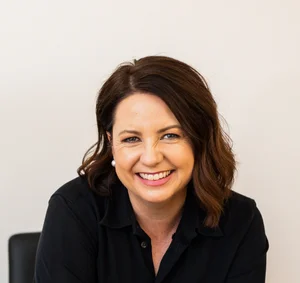
In my recent conversation with Fi Mims, we talked about this exact season. Fi is an award-winning personal branding photographer and business coach helping women 40+ step into greater visibility, confidence and demand, so they can grow profitable, sustainable service-based businesses. And what she sees all the time is women who are capable, experienced, and doing a lot, but still waiting. Waiting until they feel more ready. Waiting until it feels more certain. Waiting until they have more time, more energy, more proof. That “until” can quietly keep you playing small, even when you have already earned the right to take up space.
Why confidence gets wobbly even when you are doing well
A big part of the confidence wobble is the noise. Social media makes it look like everyone else is soaring through life with glowing skin, a perfect business model and a colour coded calendar. Meanwhile you are juggling clients, family, your own health, and the creeping realisation that your parents might need you more than they used to. It is not that you are not brilliant. It is that you are carrying a lot. And when you are overloaded, backing yourself can feel like one more thing you have to do.
Lifestyle first, then profit
Fi’s take was simple and honestly a bit of a relief. Lifestyle first, then profit. Not because money doesn’t matter, but because you matter more. Your wellbeing, your energy, your capacity, your actual life. When you build a business that drains you, the profit never feels worth it for long. But when you build a business that supports you, the profit becomes something you can actually enjoy, not something you recover from.
Boundaries are not admin, they are a strategy
This is where boundaries stop being a buzzword and start being a strategy. Not the kind of boundaries that look good on Instagram, but the practical ones that protect your time. Saying no to unnecessary phone calls. Moving things to email so you can respond on your own terms. Tightening your processes. Automating what you can. Reworking the way responsibilities are shared at home. None of this is glamorous, but it is powerful. It is how you create space to think, breathe and lead.
The ripple effect of backing yourself
And once you start doing that, confidence tends to return in a quieter, steadier way. Not the loud confidence of proving yourself, but the grounded confidence of knowing yourself. The ripple effect is real too. When you back yourself it doesn’t just change how you show up in your business, but it also changes how you show up in your relationships, your health, your family, and your everyday decisions. You feel it and so other people around you feel it.
Consider this your permission slip
So if you have been waiting for permission to do things differently, consider this your permission slip. You do not need to earn rest. You do not need to justify wanting a life that feels good. You are allowed to redefine success in a way that actually suits the season you are in now. And you are allowed to build a business that supports the woman you are becoming, not just the one you used to be.
-
Tracey: [00:00:00] Hi everyone. Welcome back to the podcast. A lot of business owners that I work with are women 40 plus. Not [00:01:00] all, but a lot. And I often hear from these women that they've been waiting to reach out to me to get legal support until they knew their business was going to be a thing, or until it was going to be successful, or, or until it was going to make money.
There's always an until, and right from the very first conversation, there's doubt. There's doubt about the confidence they had or how they had not backed themselves fully up to this point. But After many years of their brilliance, they've discovered that indeed their business is a success and they're now ready to back themselves.
This is not all women that reach out to me, and indeed I do support men in business too, but there is a, a large portion of women that reach out to me in these circumstances. It's for this reason that I have invited a guest onto the podcast today to talk about her niche in business, which is supporting women 40 plus in their business.
Today I'm joined by Fi Mims, who is a brand photographer and a business coach [00:02:00] specializing in supporting women 40 plus. It's such a lovely, refreshing conversation, and I have found that this conversation really does dive deep into the issues that underpin this doubt and what's holding women back, but also it acts as a beautiful permission slip.
I'm hoping this resonates with you. I'm sure you're going to enjoy this and take so much from it. I know I certainly did. Let's dive in with Fi
hello Fi, welcome to the podcast
Fi: Hi, Tracey. Great to be here. I'm very excited
Tracey: So lovely to have this conversation with you, and I just love that we've talked about what it is that we wanna share, and we're going to just dive in and have this beautiful conversation, which I think is going to resonate with so many of my listeners. So thank you for taking the time. For those who don't know you, can you just share a little about your background?
Because I know you as the amazing brand photographer you are, and a business coach for women 40 plus, and that's what we're going to dive into. But there's a little bit of background there and, and how you got here. Can you just share a little bit about that?
Fi: Yeah, for sure. Would [00:03:00] love to. so I've been in business or had my own business for 23 years. I've been around quite a while before socials and Google and all that jazz. I started out as a wedding photographer. I did that for 10 years and, and family portraits and absolutely loved it. Loved that connection loved that ability to connect with people and to create something that really brought them joy as well as something I could enjoy doing and that was quite creative, and I'd never really thought of myself as a creative.
But then I fell pregnant with twins. I very quickly said, "Right, I love photography, but I don't wanna work weekends anymore," and transitioned across to business photography and very quickly niched into women in business. Just knew that that was where I wanted to put my support as a woman in business myself.
and I suppose the rest is pretty much history from there. But from niching into women, I suppose I did that for about 10 years, and over the last five years I've really been niching into women probably around my age, right? 'Cause I'm following that same journey. I'm, a 53-year-old woman for-- Actually, no, I'm not.
I'm 52. [00:04:00] I turn 53 in a couple of months. I'm ahead of myself
Tracey: do that to yourself
Fi: gosh. Although I am loving my 50s, so I have no qualms with that. But, um, these days I have niched into women 40 plus because I'm a really strong advocate of as we get older, women should be just sharing their voice even louder.
And I think often, as we've seen probably from the media, but also from you yourself and myself in business, y- we see women becoming less visible in this day and age, and that's for many reasons, which I think we're going to dive into. But I, I'm just such a huge advocate of this should be the best era of our careers.
but we get held by, back by so many things. and obviously there's a juggle that comes with being a woman of this age in business. So, I've been a photographer right up until today, but about five years ago as well was when I started transitioning into coaching. I did that first through a membership, which I ran for five years.
I ran a couple of group programs as well around personal branding, which is one of my strong specialties. Uh, and [00:05:00] then two and a half years ago now, I launched a mastermind, which is very much a deep dive coaching program where I help women 40 plus in service-based businesses grow their service-based business, but in a way that's also sustainable for them because we don't wanna hustle at this age anymore.
And I absolutely love where my business is now, where I still run my photography alongside my coaching, but it just fulfills me and hopefully my clients in so many ways. So that's, that's my journey in a nutshell.
Tracey: Thank you for sharing it that way and so beautifully. When I'm listening to that, there's a massive sigh of relief that comes, and it's almost a permission slip. When we are 40 plus and there is somebody saying, " Not only should you be doing this, you can be doing this. You can be taking up so much space.
That's okay." Because I feel like, as you say, as we mature and, you know, age, become more seasoned year after year, however you want to frame it, I think aging's a privilege. And I, I love these conversations, but I feel like there is an [00:06:00] element of a woman in business who shrinks away because of the era of social media, the video, the AI, then the competing realities behind the scenes in terms of family and kids and, you know, the aging parents often and other commitments, all the things.
And so we put ourselves on the back burner and think, "Well, that's all more important, so I'll put myself on the back burner," which by extension is business, and then it sort of just sits there. And I actually am a proponent for thinking it needs to be the other way around in terms of our prioritizing allowing ourselves to take up space and be seen and doing all of these things.
Of course, the other things will still be there, and I'm not suggesting they're less important, but what I'm saying is that there is a permission slip here in this conversation to actually bring yourself front and center
Fi: Yeah, absolutely. I fully agree. And it is quite sad that, you know, in this era of our life, this season of our life, we should have built a lot of confidence, and I think we have in many [00:07:00] ways. But like you say so beautifully, it's that era of social media and video which makes women of our age go back to feeling so vulnerable again because of, you know, again, it's not-- that's another whole podcast, but the messaging we've been brought up with and then the messaging we are still having heaped upon us and layered upon us now, again, as we are aging.
So it's all competing with, you know, how we've shown up. And I think a lot of it as well is just around, not the burnout, but the relentlessness of business. And what I see too often is that women have built great businesses, but they're businesses that they are tied to. They just have to do so much still, and a lot of that is just around the lack of building a, business that is set up to support them, if that makes sense.
So via systems and automations and Probably through just pricing them appropriately as well and backing themselves. So, yeah, we should be feeling more [00:08:00] confident and more able to share our voice, take up space because of the decades of experience we have behind us. But I think as we're saying, because of all those competing interests, we find ourselves stepping back.
Because in some respects, if your business isn't set up to support you, and you've got all these competing interests on the back end, um, whether that be, you know, the sandwich generation, way of life where you're looking after elderly parents as well as kids, and, and my kids, I've got teens that are 17, so they're quite self-sufficient.
But, you know, as teen parents out there would know, like you still have to be around a lot, whether it's as a taxi driver, someone who they can talk to. I mean, there's still a lot involved in parenting. And then of course, we are in a season as well where we have to look after ourselves more. and I will say this even from a personal point of view, I've, always been quite a healthy woman, you know, exercise and look after myself with my diet.
But at the same time, I haven't prioritised my own health because it's those first 10 years of having kids, you just don't have time unless you wanna get up at [00:09:00] 5:00 AM, let's be honest. And I'm not a 5:00 AM person. I'm an 11:00 PM person, and you can't exercise at 11:00 PM or do your work. so there's those competing interests.
but when I, work with women, I know there's a lot of talk in business that we should be profit first, and I'm a full believer in that. But I think in this age it's lifestyle then profit first, and we're still too much about profit at any cost, and we're putting our lifestyle on the back burner, and that has to flip.
Tracey: I just wrote that down because that is gold right there. That's the permission slip, lifestyle then profit, and I am here for that. That's very much how I approach business and life, but I hadn't articulated it that way, so I didn't realise it until you had just said it. Lifestyle then profit, and you're right, and I'm nodding along as you're talking about the part around having kids and for the first 10 years and all the things.
But also what's jumping out really clearly to me listening to you talk, Fi, is that there's a confidence piece here that we need to address, and from there [00:10:00] flows, I think, almost everything. Processes and systems. I'm worth getting support. My business is worth investing in some support to develop processes and systems.
I see it a lot with business owners that I support in terms of their contracts, and they say to me, "I've been running this beautiful business for five years. I've always known that legals are something I need to talk to someone about, but I just haven't prioritised it. I just haven't got there because I've been doing all the other things first, and it's an investment, and I haven't felt that the business is really worthy yet or that it's going to be something.
So I started out giving it a crack. I'll see how it goes, and if it turns into something, then I'll reach out and get everything done properly." it's a little bit back to front in terms of again, the order of priorities, but it seems like when you boil it down, it comes back to confidence.
I'm not backing myself that I'm going to be successful
Fi: Yeah, and you've, nailed it in that sentence. And, and look, I will say from someone who often talks to women about my mastermind, you know, and, and I think anyone out there with a high ticket offer that is very helpful for people, [00:11:00] one of the most common responses we get is, um, you know, "I'm not ready to invest in this.
I have to make some more money first," or for whatever reason, right? And I always equate that to you're actually just not backing yourself yet. You're not ready to back yourself yet. Because I know that I have invested a lot back into growth and development over my business, and I've only done that because I've trusted that I'm going to make it work out in future, right?
Uh, really, that drives you, right? Because if you don't invest in yourself, you stay stuck in that cycle wherever you are. I'm not saying for everyone, but you know what? I feel like that can happen a lot. Whereas if you invest in yourself, you're saying, "I'm worthy of this," like you said. " I believe that I can make this work.
I believe in myself." And yes, you might have to work hard, but do make it worthwhile, right? And that's the only way I feel you can grow in business, or the only way you can grow faster than if you were to do it on your own.
Tracey: And there's a ripple effect there that is becoming really clear as you're talking, and that is when you're taking that [00:12:00] step to say, "I prioritise myself and I'm investing in myself and I'm going to do this and I'm going to do this thing," there's a ripple effect to how that's perceived by those around you.
So how you're showing up, how your clients are, are connecting with you because they can sense that too. The space that you're taking up, it's no longer small. it's really powerful
Fi: It is so powerful. And you're making me think of one woman in particular who came into my mastermind in the first year, and she had a great business, but she came in to elevate her branding 'cause she felt like she needed that growth, and she knew she had a confidence problem. And we worked on her confidence and her brand for six months, which, which came back as well to her offers and how she was pricing them because she was making herself smaller through her offers.
And I know this client really well, and we see each other regularly, and I saw her just last month, and I mean, firstly, she's doubled her income now. She's working with her dream clients. But she's like, "I got off a sales call last week," and I'm like, "Who even is this [00:13:00] woman?
I would never have talked like this a year ago," you know, with the confidence and it's all about learning to back herself. And again, I think it's that catch-22, whereas if you stay where you are and you just keep saying you're gonna be able to get out of this yourself, and then you'll find some support and help to keep, you know, growing, you do say, stay stuck.
And that relentlessness and I suppose lack of, return that you're getting in your business feeds back into your confidence, so you never give yourself that chance to build your confidence because you're not really out there taking those steps to show to yourself, "Well, actually, wow, I can do this." And that's where, you know, we know, right?
That confidence is just one small step after another, and then you build it. It doesn't come and find you, and then you go, "Right, I'm going for it."
Tracey: That's exactly right, and I was about to say that when you were talking. It seems like there's a common thread, if you like, amongst so many women 40 plus in this space, service-based business, product-based businesses, whatever it looks like, and it's all different. Everyone has their own different challenge or [00:14:00] insecurity or vulnerability boundary or barrier, or there's a whole different way that you could frame it.
But when we bring it back to confidence, th- what I was going to say to you is, well then where do you start when you're working with women when we need to start from the ground up and say, "All right, we need to talk about building confidence"? Because from there we talk about offers, we talk about pricing, we talk about processes, we talk about systems, we talk about supports.
I could just keep going on and on and on, but it starts back at the confidence. And I don't think there would be any woman listening who says, "Oh no, I don't have a confidence problem. I absolutely don't have a confidence problem." I don't think that would be anybody ever, actually. Somebody would have-- Everybody would have something at some point, "Oh gosh, I actually feel really insecure about this.
I get the imposter syndrome when this happens. I don't feel worthy. Who is that woman on the sales call?" You know, all those sorts of things. So where do you start when you're working with women in your mastermind, say, when we need to start and talk about confidence? Where do we start the conversation to work out where to go to next to overcome our particular unique barrier or hurdle or whatever it is, [00:15:00] however we want to frame it?
Fi: Hmm. Gosh, it is such a good question. There's many places you could start. one is, I think, because the women I work with, they are, you know, in that 40-plus niche, they have already achieved so much in their life. So, often I will start with reminding them of that.
Like, because I think the confidence is often-- I mean, the women that come to me for coaching support, they're, they're n- it's because they're not where they wanna be or they know they can do better, but they're really stuck. So, because they're not getting the results they think they should be getting, they feel like they're the problem.
So, I think the most important thing is to remind them that they're not the problem, it's the way they've set up their business, or the fact that they haven't got the right, whether it be sales funnels or they, they haven't invested in their branding or, you know. There are many different areas of their business that, could be part of the problem, but it's reminding them that they're not the problem.
They have got the skills, they've got the experience, and you can prove that to them through, you know, the many decades they've been building up that experience and [00:16:00] the results they have got so far. And then we paint that picture of, "Well, here's how your business could look," and that's where we start to work on things like, well, you know, c- how would you want your life to look?
where do we need to price you here? It's, for me, it's helping them with their identity, so they need to see themselves as that woman that can create that. 'Cause I think often we see everyone else on social media as well, and we're like, " that's out of reach for me." Like, that's a next level, right?
When really it's not. I think, uh, success in business, it looks different to everyone, but it's available to everyone if we take the right steps and the right actions. So it's really getting them clear on who they wanna be and how they wanna show up in the world. And also then on the other, the flip side, making sure that, you know what, if you just set up your business this way, and if we adjust your pricing this way, and if instead of trying to do 10 things, let's bring you back to trying to do three things.
you know, they do start to see step by step that, with each win they get, they start to build that confidence in themselves [00:17:00] and their business. But I suppose just going back to that beginning, I start by sh- saying: Look, you are already amazing. You've already got these results. You're just, comparing yourself to the wrong things and the wrong people.
Tracey: I love that. And how can we not in the day and age that we live when we're on Instagram or we're on LinkedIn and we have to be there because that's where we're showing up or whatever platform we're using, and then we're looking at other people's highlight reels and we're thinking, "Gosh, I'm so much less than.
Gosh, I need to be doing more." There is so much noise. I think there's so much power in what you've said right there, because everybody listening can do that right now and just pause and just extend some kindness and some acknowledgement to themselves or to ourselves. This is what we've already achieved in life.
We are not starting from scratch. We've actually done some really good stuff. We're actually capable and we've actually been in the arena and we've done a lot of things, and that means that we've got so much more to offer because it comes from that seasoning and that experience, because from that we have crafted our own unique [00:18:00] expertise and we bring our insights and our perspective and our life experience.
I think that is so incredibly undervalued that we could signwrite it and put it somewhere, particularly now in the world of AI where people are saying, "Oh, but can't I just go and get AI to do that?" Well, you could, but it's not going to be very good, let's face it, because it doesn't have your perspective, your expertise, your experience.
It doesn't have your lens. Starting there is so powerful and that just feels so amazing just to acknowledge, okay, we're here. We got here. We've done so much. We
need to acknowledge that
Fi: Yeah, yeah. we really do. And this is where I think our age is our superpower, right? Because we do have so much to share, and it's not just business knowledge, it's, life experience. And like you said, it's showing up and sharing more of ourselves and who we are, our perspective.
And a lot of women are just so overwhelmed with the noise and the relentlessness and the competitiveness that online space. It's [00:19:00] like not seeing the wood for the trees, because actually, if you just show up and share your perspective, your thoughts, your uniqueness, your life experience, be the human you, you are streaks ahead of everyone else, and there are so many else out there right now, so many others out there right now that are just leaning into AI and the easy content wins.
you're going to stand out. But I think too often instead they take a step back and they're like, "It's too hard. I'm showing up, but I'm not standing out." Well, actually, you can, but that's again, where, as you said right at the start of our conversation, that's where we have to then work on that vulnerability and that confidence of supporting women to show up and be genuine and authentic in the way that feels right for them.
And again, when they start to get those wins and they see the responses and they see people react to them online and, who are thankful for them for showing up genuinely and authentically, that's [00:20:00] again, when that confidence will start to build. But it's, It's a process.
Tracey: I- it is a process, I love the phrase permission slip because I feel like that's what this discussion is for women. It's a permission slip to actually just be yourself and stop trying to be more because you don't need to be more, and stop trying to be like other people. Block out the noise, strip it back, and let's simplify.
Build confidence. Here's the permission slip. You don't need to do any more because you've done enough. Now it's time to celebrate that and get visibility on that. And then we dovetail into that equally beautiful permission slip, which is build your lifestyle, then your profit. What works for you, because that evolves and I feel like it's important to say that evolves and that's okay.
You're not expected to be working like you're 20.
Back when I was 20, I was a litigation lawyer. I'd just been admitted. I was a litigation lawyer and I had no life, certainly no, kids, no relationship, no husband, none of that. It was just work and that was [00:21:00] excellent because I was 20. And then into my 30s, the exact same thing for 12 solid years.
I mean, I'm not suggesting everyone should do that because with that comes adrenal fatigue and burnout and a whole
heap of things that you don't realize along the way. But the point is it evolves and what success looks like to us evolves and that's okay. And what we want to give, how much of ourselves we want to give to our work and our career evolves and changes and shifts and that too is okay.
And I feel like there's guilt attached to that as we go through life and that feeds into our vulnerabilities and our insecurities because we're thinking, "Gosh, but I used to do it like this, but now I can't do it like that because I'm exhausted come the end of the weekend because I've been Uber driving the kids and I've been seeing the parents and I've been doing the errands and I've been the CEO of the household.
But now I'm going to start Monday and I really should be sharp and I should be now working a gazillion hours this week to be successful because that's what success means in business." women are redefining the way we do business and more and more women, [00:22:00] I think, need to accept that women are powerhouses when it comes to redefining business, and that's okay.
Don't get caught up in the guilt of it
Fi: Oh, absolutely. I love that. That's music to my ears. That's a great permission slip, Tracey. You're right, and I think as women as well, we, we are the more nurturing gender, right? Like in general, and we want others to be happy and to feel good, and I think we use that as an excuse to work harder because we want to be helpful to everyone, right?
But we are in business, and you can serve people and help people and support people and still support yourself. So why are we putting ourselves a step or two back and saying, "Well, as long as everyone else is okay, then I'm okay"? and you know, that conversation extends to the home, and something I'm starting to talk a lot more about now is the fact that, you know, women have talked about the mental load a lot over the years, and I am extremely blessed to have a husband that is very 50/50 with me through the household.
We share everything equally, and it has been a game changer for me [00:23:00] and my business as I've grown over time. but I know not every woman is that lucky, and they still hold that mental load. so we have to work harder in the home to have those conversations and to make sure we and our businesses are supported and looked upon with as much importance as our partner's business.
Obviously, you know, the dynamic is different depending on everyone's household, and I, fully am saying this knowing that as well. but the other two areas I'm getting really ranty about right now is that the amount of school admin as double income parents we have to deal with is ridiculous, and the schools need to progress and change that and, and workplaces need to progress and change the way they are set up because I mean, the world is now, in the most part, double income, right?
Double income parents, but they're giving us too much work. They're still thinking there's one partner that is free all week to look after this stuff, and that is not true. So I'm
starting to rant about that sort of
Tracey: Oh, look, a whole podcast episode on its own we could talk about [00:24:00] that. As soon as you said school admin, that was so low vibing my whole body just
sunk and it was like, ugh. I know. It's, it's, it's-- I've had-- Yeah, it is, and I've had, you know, momentary, I call them just little meltdowns with my husband where I've said, "I just can't keep doing all of this."
I'm all over the admin and I'm an A-type personality, so I'm, you know, all of the things which he's not, and I'm blessed too that he contributes equally around the home, as I feel very privileged for that. But when it comes to admin, no, that's on me, and we just have to own that. It's taken me many, many years to work out a system, again, coming back to systems Fi, work out a system to deal with that because I accept that that's actually my role.
He does those things and those things and those things. The admin falls to me, otherwise I'm going to be a nervous wreck that someone's going to not turn up to the right place at the right time. But it's, it's the systems, and it comes back, I think, to the permission slip and the backing ourselves to say, "Well, I need support for this.
I need support for this." And I don't mean necessarily outside paid support. I actually have built in my home admin to my monday.com board that we use for my [00:25:00] workflow at work. I have one set up just to make sure that it works. But I've had support with all of that to learn how to do that and to build that sustainability into the business
Fi: a lot of the conversations I also have with women are around boundaries, and we can be really bad at setting boundaries even at this age, which, you know, is something we all need to think about. And a really practical example that I can use in my life is with-- I've got two parents in the same aged care centre.
So some days I can get, you know, four or five calls from the aged care centre just to give me an update, as a lot of it is updates. and it's really disruptive. And I got to a point where I just, said to them, I said, Anything that's not urgent now, you can just email me, please. That would be really helpful."
And it's taken some time, and I still get the calls, and I just give them a little reminder, "Look, really kindly, please just email everything to me unless it's urgent." And now 90% of what they used to call me about just goes straight to an email, and I can check it and I can reply, "Thank you so much for this update.
Got this. I'll action it when I [00:26:00] can," whatever, if I need to. And that's just like a really tiny example, but I think often we might just sit in that and go, "Oh, well, this is my lot. I just have to take these calls because, you know, it's, it's the aged care centre." But it's not always that way, and that's because they have their own processes, and their processes say, "You have to call this person every time something happens to one of, you know, one of her parents."
When really a lot of it is just, again, for them, it's their systems and processes, but we can set boundaries around that for ourselves as well. So it's just, uh, one little example, but I think we have to think a lot about, well, where do my boundaries lie and what's, really necessary and what's not necessary, and how can I protect my time?
'Cause our time is our biggest asset. It's not the
right word. You know what I'm trying to say? time is. the most important thing in our life.
Tracey: it is. It's all we have. I'm loving all of this and there is so much clarity that comes from this conversation and so I'm so grateful that we've had an opportunity to talk about this here on the podcast to share with listeners. And clarity is one of my values.
Clarity, confidence, curiosity, connection, communication. [00:27:00] And this just all feeds into this beautiful conversation and it starts with confidence. As we hit that 40 plus, we start then doubting ourselves because there's guilt attached to all the things. There's programming, there's conditioning. We are disrupting the way that women do business.
We're disrupting the traditional sense of what the household looks like and it causes doubt and it causes uncertainty and I think sometimes it causes fear. And I know you see it and I see it, but when we strip it back and we say just pause and let's focus on ourself for a moment, we've done so much.
We're worthy. We can do this. We're entitled to be able to do this. We deserve this and all of the rest. Once we focus on the confidence and actually say, "Okay, I'm gonna back myself here and I'm actually gonna get the support that I need. I'm gonna reach out. I'm gonna invest in this. I'm gonna get help with this," all of a sudden the ripple effect is so wide.
It, it's just so far reaching and that's where the magic happens, I think. And then a part of the confidence [00:28:00] in the support and the prioritising ourselves is the boundaries will come. What does success look like for me? Let's focus on the lifestyle I want and then let's have a look the dollar figures attached to that revenue and profit, but lifestyle first and I loved how you framed that.
And I've, as I say, I've written it down and I'm going to actually go back and listen to this episode again, Fi, and, and take some notes as I'm sure many others will as well. If there's a woman listening to this who's nodding along to every single thing that we've said, and I'm sure there will be many thinking, "Yes, yes, I resonate with all of this," what's something you'd like her to know?
Fi: You're always worth more than what you think as a woman. You're always worth more. And just remind yourself that if you back yourself and build your confidence, that is going to make you happier and more fulfilled. And when we as women are happier and more fulfilled, like you've been saying, Tracey, the ripple effect goes so far.
It goes to our relationships with our partners, it goes to our parenting with our kids, it goes to the way we look after [00:29:00] ourselves and our health, and of course, it goes to our clients and our business as well. and, you know, those ripple effects can carry on for generations. we need to look after ourselves.
Love
Tracey: I love that.
Fi: You're awesome. You're worth it
Tracey: I love that. Fi, thank you so much for spending your time with me. This has been so, so enjoyable to have this conversation. Can you share with us, the listeners, where can people find you?
Fi: I am hopefully pretty easy to find. Just Fee Mims on Instagram, on LinkedIn, uh, my website feemims.com. That is M-I-M-S. so yes, come and find me. I love a chat in the DMs. Uh, just come and connect with me. would love to connect with you all, and I just hope, Tracey, this has been really valuable, and I've, I've loved our conversation too.
So thank you so much for inviting me on. It's been awesome.
Tracey: Thanks Fi, and we'll pop all those details in the show notes as well. I loved the clarity that came from that conversation so much, and I really hope that you did too. The clarity around the importance of confidence, our identity as a 40 plus woman, the [00:30:00] power in stripping it back and focusing on the lifestyle that we want and then focusing on the profit. I loved all of that so much.
We're going to include Fi's links in the show notes so you can reach out directly and follow along if that resonated with you. But I'm really hoping that this was a positive and uplifting conversation and that you're feeling a whole lot better about your journey, how you got here, the value of that, where you're headed, and what it is that you can do immediately to make little shifts in your business to back yourself And step into your most authentic self even more. As always, thank you so much for joining me on the podcast. If you know a woman in business who you think too would benefit from these little permission slips and from hearing us talk about the really the most common issues that we're experiencing with women that we work with, I would be so grateful if you'd share the episode.
Thanks so much. Catch you next time. [00:31:00]
Join Me on Social:
Rate, Review and Follow me on Apple Podcasts
If you are loved this episode, please consider rating and reviewing my show! This supports me in helping to empower more coaches, creatives and consultants - just like you - protect what they're building, and move forward with confidence in their business. It's quick and easy - click here, scroll down to the bottom, tap to rate with 5 stars and select 'write a review'. As always, I'd love to know what you think, and what you loved most about this episode. Also, don't forget to follow the podcast to stay up to date with the latest episodes.